


When Nicole Buetti first picked up the bassoon, it was supposed to be a not-so-secret weapon in woodwind-on-woodwind combat.
She was 11 years old and stuck playing the flute alongside her school orchestra’s premiere flautist, who kept jabbing her with that sharp little tube. Probably accidentally, but who knows?
“And then I saw a bassoon, and I thought, ‘I could take her out with that,’ ” Buetti recalled with a laugh.
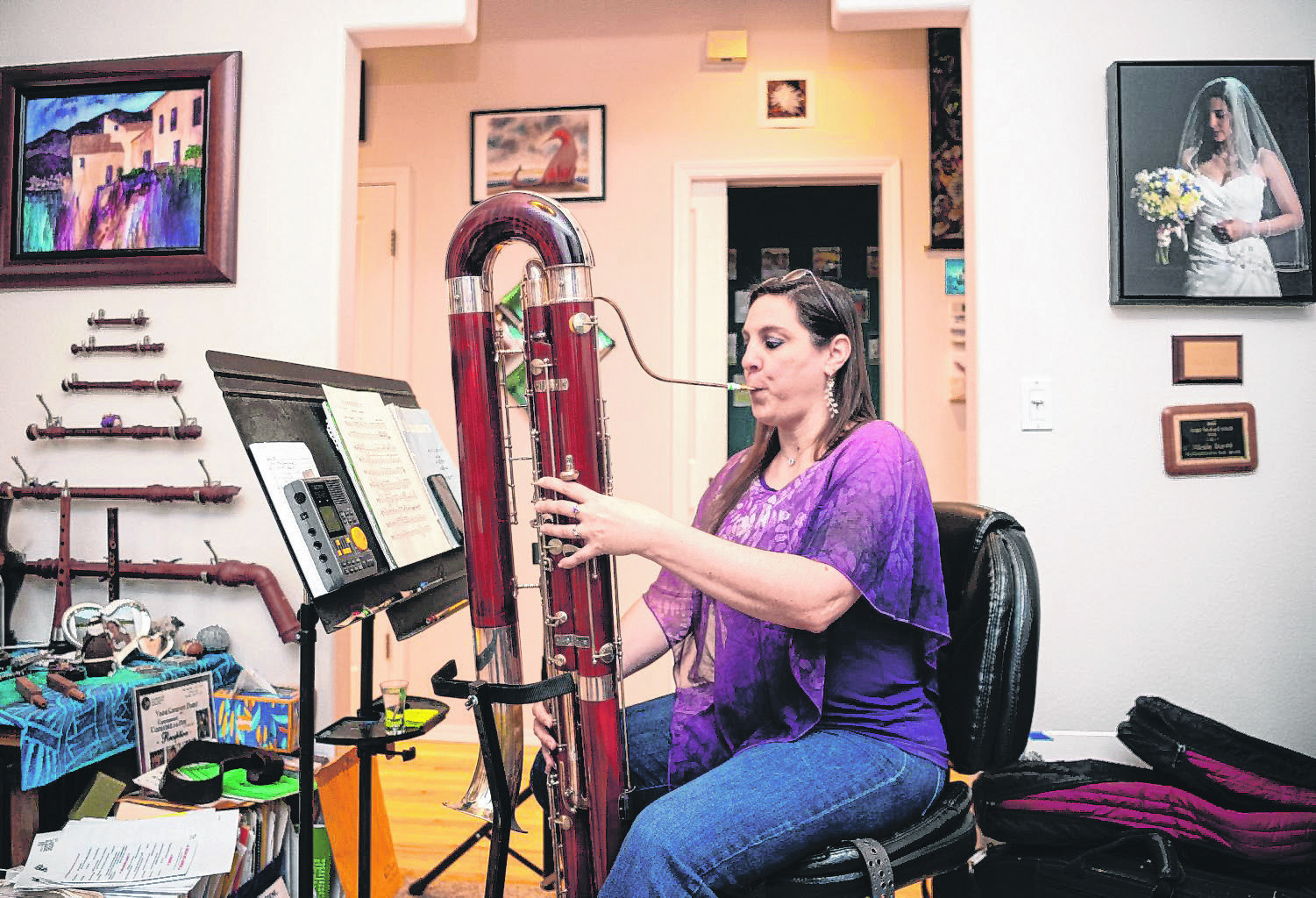
But instead of treating that complicated 4-foot-long instrument like a club, Buetti fell for the bassoon’s deep yet oddball bass timbre, which can resemble a human singing voice or the quack of a big duck. A solo bassoon is what carries the quizzical, comedic melody through “The Sorcerer’s Apprentice,” Mickey Mouse’s magical dream in the Disney musical “Fantasia.”
“When I heard that low sound, I knew that’s what I wanted,” Buetti said. “People told me, that’s a really hard instrument. So many buttons! So much tubing! But it didn’t matter.”
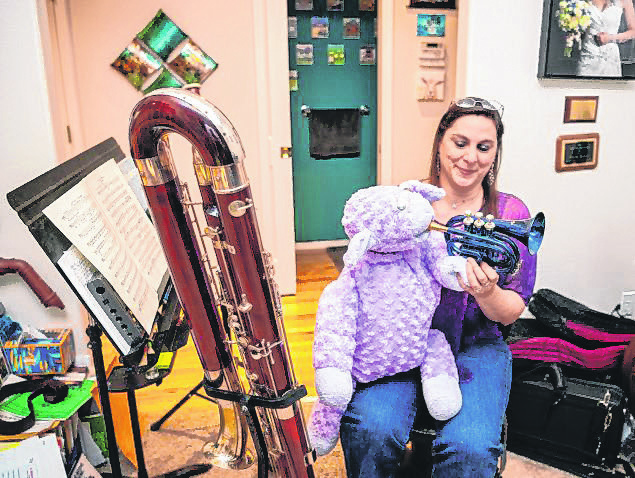
Vancouver resident Buetti has brought her mastery of the bassoon — and of its even bigger and deeper-voiced sibling, the contrabassoon, which can run 6 to 7 feet long — to numerous local orchestras and music groups. She holds the contrabassoon chair in the Vancouver Symphony Orchestra. The multifaceted Buetti, 46, is also an award-winning composer, video artist, voice artist and puppeteer whose music-education and science-education productions have earned millions of views online.
She also gives private music lessons at local colleges and at home in Vancouver, where she lives with her husband, pro trumpet player Jason Gunderson. And she holds down an unrelated accounting job.
“Juggling is an absolute requirement if you’re going to be an artist in this world and pay your bills,” Buetti said.
Pumpkins to quasars
Buetti’s father was a U.S. Army officer and West Point physics teacher whose family was often on the go in America and Europe. Eventually they settled in Colorado Springs, Colo., where Buetti attended the University of Northern Colorado and earned two bachelor’s degrees in bassoon performance and in music composition and theory. Later, she also earned a master’s degree in bassoon and contrabassoon performance at UNC.
In Los Angeles, Buetti went to work in the entertainment industry as a music supervisor and composer for movie trailers and TV ads. Eventually she formed a creative partnership with fellow composer Dirk Montapert. Influenced by a line from the rock music mockumentary “This is Spinal Tap,” the duo named their company Goes To Eleven Media.
Driven by their shared love for all things Halloween, Buetti said, the duo focused on spooky music and sounds of all sorts, from pop songs to motifs for haunted houses and theme parks. It was a surprisingly successful niche, Buetti said, until friends at home suggested that those original Halloween sounds — which she enjoyed blasting out into her neighborhood during trick-or-treat season — were actually a little too scary for children.
Buetti and Montapert softened their approach.
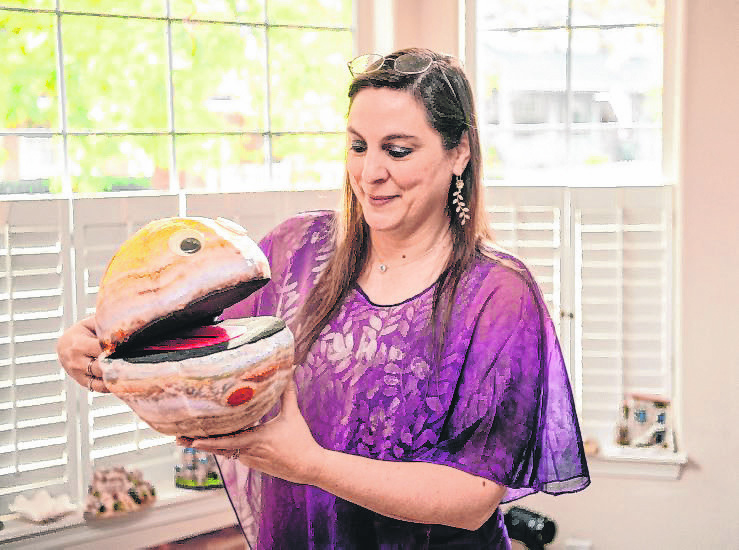
“We decided to go into video,” Buetti said. “I started making puppets out of whatever stuff I could find in the garage.”
Think Nerf balls with glued-on googly eyes and a silly band name: The Nirks, for Nicole and Dirk. A kinder, gentler approach to Halloween remained The Nirks’ focus at first, until Buetti’s science-minded father chimed in with a challenge.
“He said, ‘What’s with all this Halloween stuff? Why don’t you write a song about the planets?’ ” Buetti said. “He was a physics teacher and a space guy.”
Buetti and Montapert raised a modest money through a crowdfunding campaign and created “Meet the Planets,” a series of musical puppet videos, which took off like a rocket and has reached something like 15 million views on YouTube. Because there’s so much to explore in outer space, Buetti said, the ongoing series (with a new release every two weeks) has grown beyond our own solar system into “Meet the Universe,” featuring increasingly cosmic topics like “Meet a Nebula,” “Meet the Exoplanets” and even “Meet the Quasars.”
“He was a quasar,” Buetti said of her inspirational dad, who died just before the COVID-19 pandemic. Quasars are the brightest objects in the universe, she pointed out.
“I like to think he’s out there exploring, checking out all the best stars and black holes,” she said. “Wherever you are, Dad, you were right.”
Big brass, odd animals
Buetti is the second contrabassoonist in Orchestra Nova Northwest (formerly Portland Columbia Symphony), an intentionally progressive orchestra that foregrounds new works, as well as composers who are women, Black, Indigenous and people of color. During the COVID-19 pandemic, Orchestra Nova Northwest commissioned Buetti to follow the educational “Meet the Planets” series with a similar but more terrestrial one, “Meet the Instruments.”
That series involved puppets interviewing musicians, all of which was recorded and filmed at Buetti’s Vancouver home in painstaking pandemic fashion. Every musician who stopped by to demonstrate an instrument (and chat with a Nerf ball) had to be socially distanced and solo. That left Buetti with the task of editing together many layers and fragments, supplying the illusion that all the dialogue and music had happened live and together. Buetti released one episode of “Meet the Instruments” every week for 16 weeks.
That series has also proved popular, if not quite as astronomically popular as the one about outer space. Online feedback like “Now my 5-year-old wants to play the contrabassoon” is all the reward Buetti needs, she chuckled.
Meanwhile, another Portland outfit called Big Horn Brass commissioned Buetti to compose something even grander and more grown-up. To fit the regal, commanding sound and style of an all-brass ensemble, Buetti and Big Horn Brass executive director Andrew Harris came up with the theme of endangered elephants. Eventually the idea arose to pair Buetti’s music with video, and to reach out to elephant conservation groups that could participate in the project and benefit from the exposure.
“I love animals,” Buetti said. “And it’s nice if you can accomplish something good with your music.”
Two organizations that signed right up were the International Elephant Foundation, based in Texas, and the Oregon Zoo. Buetti was treated to a private elephant tour at the zoo, where she was able to spend some precious one-on-one time visiting (at adistance) with one elephant that definitely waved its trunk at her in friendly greeting, she said.
“They are a billion times more intelligent than humans think they are,” she said. “They know what’s going on.”
Buetti worked with videographer Justin Pleasant and photographer Karen Pleasant on “Walking with Giants,” a four-movement piece for brass ensemble accompanied by video. In just under 13 minutes, the moods and imagery of “Walking with Giants” moves from majestic and playful (in the wild) to grisly and tragic (as elephant poachers enter the picture) and then to hopeful and heroic as it finishes up with footage of how the International Elephant Foundation and the Oregon Zoo are working to stop poaching, preserve habitat and save elephants’ lives. Big Horn Brass premiered the piece in spring 2023.
“Walking with Giants” won two Telly Awards (that’s a modern television and video award, launched in 1979): a gold medal in the category of nonprofit film for nonbroadcast (online) media, and a bronze medal for the “Walking with Giants” music itself. Add those awards to the bronze Telly that Goes To Eleven Media won a few years earlier for “Meet the Planets.”
Buetti was also named the Washington State Music Teachers Association commissioned composer of the year for 2025. That opportunity allowed her to indulge her passion for her favorite instruments. Taking inspiration from a trip she once made to Australia, where she saw some of nature’s strangest creations — including wombats, wallabies and platypuses — Buetti premiered her new trio for two bassoons and one contrabassoon in June at Longview’s Rose Center for the Arts.
The piece’s fun title, “A Series of Oddities,” isn’t fooling around. The music lurches along in odd and changing rhythms, featuring only the distinctive voices of the world’s quackiest woodwinds.
“The bassoon is the platypus of the orchestra,” Buetti said.
Scott Hewitt: 360-735- 4525; scott.hewitt@columbian. com.