



Initiatives 001 and 638
More than two dozen Southwest Washington organizations have joined statewide efforts to defeat Initiatives 001 and 638, measures they say would dismantle safeguards for K-12 students.
Backed by conservative multimillionaire financier Brian Heywood’s Let’s Go Washington group, the initiatives have been billed by their supporters as a way to bolster parental rights and protect female student-athletes. But opponents argue the measures are poorly written, lack enforcement provisions and would endanger the state’s most vulnerable youth.
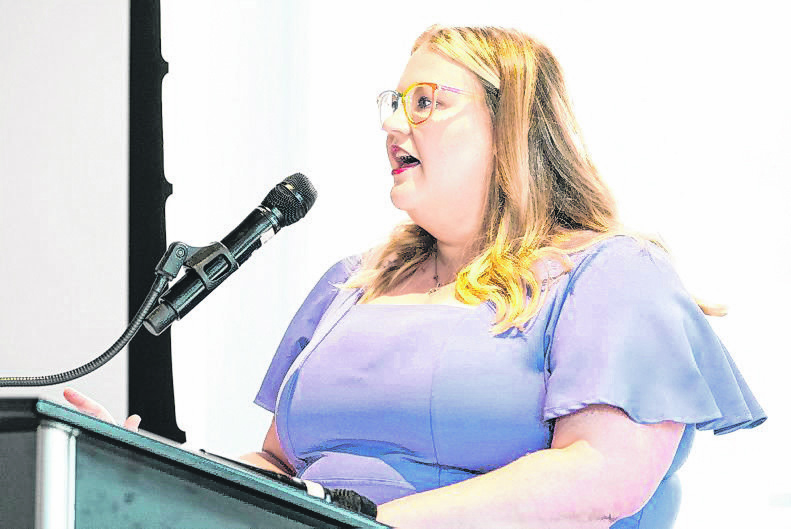
“These initiatives were designed to divide our community and distract us from the challenges folks are facing,” said Terah Ebie, president of the Vancouver-based nonprofit Queer Community Network. “But Washingtonians are smarter than that, and we care too deeply about our kids to be manipulated into voting to remove protections that are already in place to keep them safe.”
Initiative 001 would restore the original text of Initiative 2081, the so-called “parental bill of rights” passed by the state Legislature in 2024 and nullify student protections included in House Bill 1296 sponsored by Rep. Monica Stonier, D-Vancouver, and passed by the Legislature in 2025. Initiative 638 would prohibit transgender girls from competing on K-12 girls’ sports teams and require female student-athletes have a healthcare provider verify their biological sex.
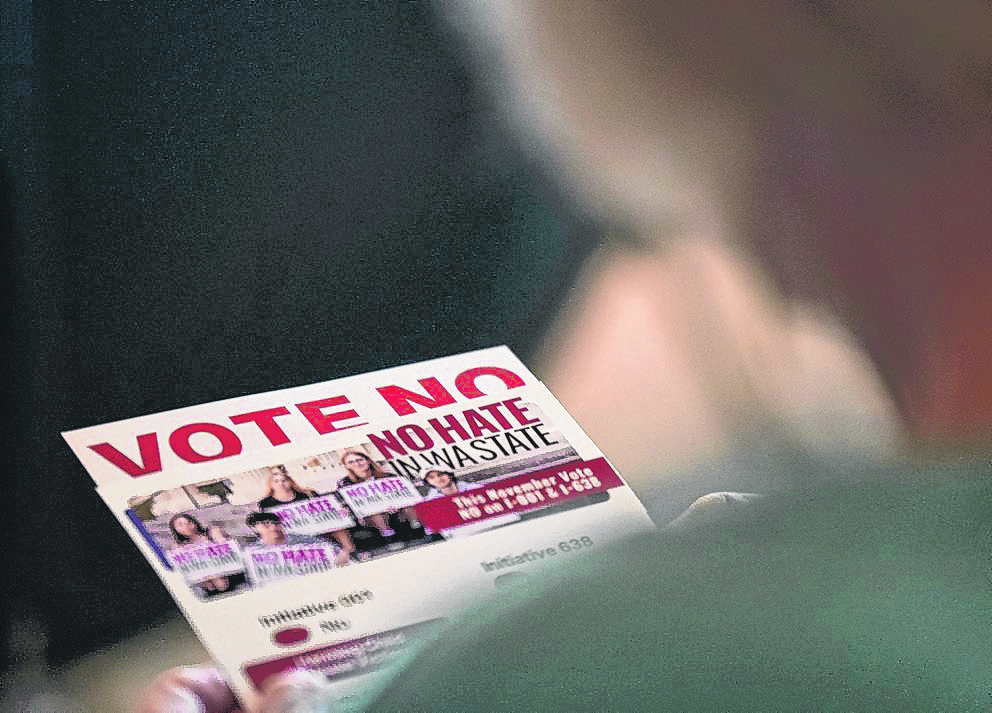
Ebie’s nonprofit group led a “Stand with Kids” event in Vancouver in mid-August to support No Hate in WA State, the Washington campaign to defeat the two initiatives.
“If they pass, these initiatives would affect students across the state,” Bren Baker, the No Hate campaign’s Southwest Washington organizer, said in a news release. “But we know that the greatest harm would fall on the young people already navigating systems that were not built for them, particularly queer, transgender, BIPOC, low-income and disabled children.”
Initiative 001
Stonier, a 26-year Evergreen Public Schools educator, said she never argued with the foundation of the 2024 “parental bill of rights” I-001 would restore. The initial measure promised to give parents easier access to their children’s school and medical records.
“My initial concern wasn’t its premise — to restore and underscore parental rights that were largely already in statute,” Stonier said.
Rather, Stonier said, she worried the 2024 legislation could be interpreted in a way that would disrupt students’ ability to speak openly to their teachers and school counselors.
“Counselors voiced the same concerns,” Stonier said. “And I’d heard from educators concerned about retaliation.”
To address some of these concerns, Stonier became the lead sponsor of House Bill 1296, a “cleanup bill” passed by the Legislature in 2025 that modified the 2024 parental bill of rights and added a statement of students’ rights that promised, among other things, “the right to learn in a safe, supportive learning environment, free from harassment, intimidation or bullying,” as well as the right to file a complaint if subject to this type of behavior.
Stonier said I-001 would do away with these student protections.
“This puts kids at further harm,” Stonier said. “I think the one thing people should know is that, first and foremost, teachers are successful if parents are a part of students’ education. This is not a ploy to drive a wedge between parents and kids. People who actually talk to teachers know that we wish to be partners with parents.”
Ebie said many I-001 backers have argued that parents deserve to know everything that’s happening with their kids at school.
“But this is rooted in the assumption that they are good parents. And not all parents are good parents,” Ebie said. “We have a responsibility to keep an eye out for students who are at the greatest risk — queer and trans students, those who have abusive parents or are marginalized.”
The 2025 legislation sponsored by Stonier, Ebie said, put those types of student protections in place.
One of I-001’s biggest risks is that queer and transgender children could be forcibly outed to unsafe parents, Ebie said.
“We know that up to 40 percent of youth who are queer or trans-identifying become unhoused, are kicked out of their homes,” Ebie said. “Parents already have the right to ask the school what’s going on with their child, but this adds a mechanism to alert parents even when they’re not asking … and removes (students’) safe haven at school.”
Hallie Herzberg, Let’s Go Washington’s communications director, said I-001 does not remove protections for students experiencing abuse or neglect at home.
“There are statutory protections that exist for kids in a dangerous situation,” Herzberg said. “Secondly, there is no ‘outing’ element. Not every detail of every mental healthcare conversation is required to (be shared with parents). That’s counterintuitive to making sure kids are growing up in a healthy environment.”
The No Hate campaign, however, has provided legal analysis from Pacifica Law Group that shows I-001 “narrows existing protections governing the disclosure of sensitive student records in situations involving children who may be victims of abuse and creates additional uncertainty regarding the scope and operation of those protections.”
I-001 opponents, including Washington Education Association, the labor union that represents thousands of Washington state educators, also point out that the initiative would end a state requirement that schools immediately notify parents when a crime — an assault against a child, for instance — is reported. Instead, the initiative would only require the school to report once a crime “has been determined,” which Pacifica Law Group found “does not provide parents with more timely notice of criminal activity involving their child.”
La Center School District Superintendent Peter Rosenkranz supports I-001.
“One of the challenges with all of this is the degradation of the family,” Rosenkranz said. “Some of the comments against (I-001) are that some parents abuse their children, but as a mandatory reporter, I make those phone calls when I see or hear things that put kids in harm’s way.”
Rosenkranz, who has worked in education for more than three decades, said he believes I-001 supports students and parents.
“Growing students’ skills as they approach adulthood has to be done in partnership with families,” he said, “and families can make better decisions for children when they know what’s going on at school.”
Rosenkranz said he feels the No Hate in WA State campaign has “severely underestimated the love a parent has for their child” by assuming families will turn against a child who identifies as LGBTQ+.
“How do we know? We can’t predict how parents are going to react,” Rosenkranz said.
He said educators and school personnel should concentrate on “trying to support all kids regardless of how they identify.”
“Let’s keep the focus on reading, writing, math and science,” he said.
Initiative 638
I-638 would require students who want to play on girls’ sports teams to verify that they were assigned female at birth and would exclude transgirls from cisgender girls’ sports teams.
“This is the most extreme MAGA measure of its kind in the country because it targets girls with invasive genital exams to medically certify their sex,” the No Hate group stated on its website. “Boys are completely exempt from this requirement.… And lawyers say it discriminates against girls, making it unconstitutional in Washington.”
Herzberg said I-638 proponents believe the measure is necessary to protect cisgender female studentathletes.
“Girls are getting fed up and have had enough,” Herzberg said. “They are finally saying, ‘I deserve to have my sport protected.’”
According to a July 26 article by the nonprofit news site The 19th News, Washington Interscholastic Activities Association records show five to 10 transgender student-athletes out of 200,000 to 250,000 total student-athletes.
Herzberg said I-638 backers are not saying transgirls shouldn’t play school sports.
“The WIAA could have a third league, a nongender league,” she said. I-638 opponents, however, say the initiative would harm both transgender and cisgender girls.
“This is putting every female student athlete in the state at risk of harm,” Ebie said. “They will be forced to undergo invasive genital examinations.”
Herzberg insists that genital exams are not an I-638 requirement.
“There are existing medical records that your healthcare provider keeps on you,” Herzberg said. “And they have a male-female designation on them.”
Pediatric nurse Kelsey Gellner, a Washington State Nurses Association board member, said it’s not quite that simple.
“There are, very specifically, three ways a healthcare provider (can provide proof of biological sex according to I-638), and none are through any type of medical record,” she said.
Even if medical records were included in the initiative’s language, Gellner said, not all students have access to this type of document.
“It’s a laborious process and can be very different based on where a child is born,” Gellner said.
Washington does require sports physicals for students who wish to participate in school sports, but these exams do not require genital exams.
“We’re listening to lungs, heart, going over their medical history, checking blood pressure and checking for things that would put a child at risk for being hurt if they’re playing sports,” Gellner said. “The physical is done to protect the child, not screen the child.”
Kelly Moyer: 360-735-4674; kelly.moyer@columbian.com